

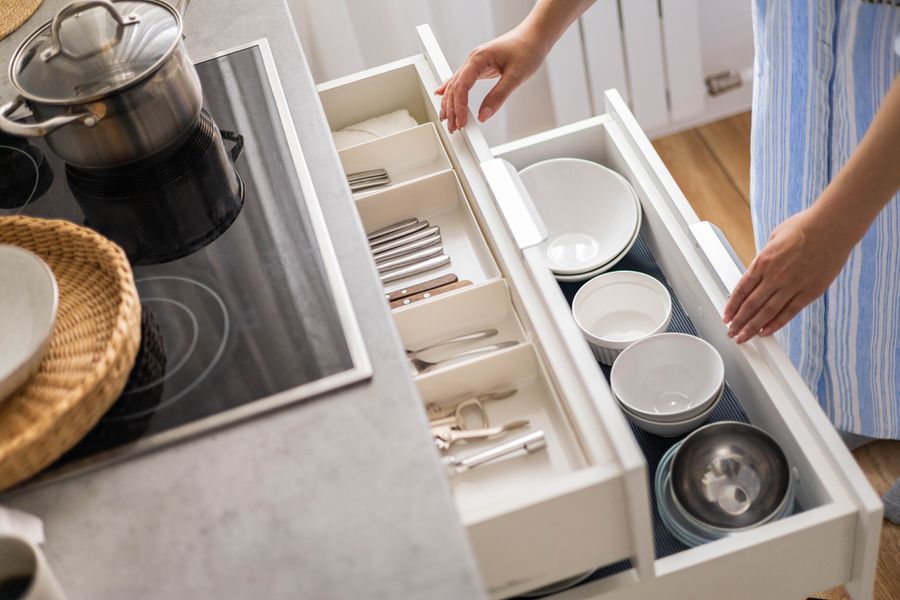
Small kitchens can feel functional and inviting with the right organizational approach. Even limited counter space, narrow cabinets, or compact layouts can be transformed into efficient work areas that support daily cooking and storage needs. Simple adjustments make a big difference, helping you reduce clutter, access essentials quickly, and enjoy a smoother flow. With thoughtful planning and creative solutions, any kitchen (no matter the size!) can feel more spacious, practical, and enjoyable.
How Can You Make the Most of Limited Cabinet Space?
Maximizing cabinet space begins with using every inch effectively. Shelf risers create multiple levels for plates, bowls, and pantry items, doubling your storage capacity. Pull-out organizers make deep cabinets more accessible, preventing items from getting lost in the back. Vertical dividers help store baking sheets, cutting boards, and trays upright, saving both space and time when cooking. Lazy Susans in corner cabinets make frequently used items easy to reach.
Decluttering also helps reclaim valuable space. Removing duplicates, rarely used gadgets, or expired pantry items creates more room for essentials. Grouping similar items, like spices, snacks, or cooking tools, makes cabinets feel more structured and manageable. When everything has a designated spot, your cabinet space becomes more functional and far less overwhelming.
What Are the Best Ways to Organize Small Countertops?
Keeping countertops clear helps create visual openness, which is especially important in small kitchens. Limiting the number of appliances stored on the counter maximizes workspace for meal prep. Items used daily, like coffee makers or a toaster, can remain out, while less-used appliances can be tucked away in cabinets or pantry areas. Using trays to corral oils, spices, or utensils keeps the counter organized and easier to clean.
Vertical storage adds functionality without overcrowding. Wall-mounted racks, magnetic knife strips, or floating shelves provide extra space for tools you reach for often. Reducing countertop clutter encourages smoother cooking routines and gives the kitchen a cleaner, more spacious feel. Prioritizing only essential items helps maintain a tidy and efficient layout.
How Do Drawer Organizers Improve Kitchen Functionality?
Drawer organizers prevent tools from becoming tangled or misplaced. Adjustable dividers make it easy to customize compartments for utensils, gadgets, and everyday tools. This not only improves visibility but also speeds up daily meal prep. Deep drawers benefit from bins or stacking trays to hold lids, containers, or bulkier items in an orderly way. When everything has a clear place, opening drawers becomes less chaotic and more intuitive.
Organizing drawers by type of use also enhances efficiency. Keeping baking tools together, meal prep items grouped, and cutlery sorted simplifies cooking tasks. Regularly reviewing drawers to remove items you no longer need helps maintain order over time. Drawer organizers transform cluttered spaces into streamlined, functional storage zones.
What Can You Do if You Don’t Have a Pantry?
Kitchen storage can still work beautifully even without a dedicated pantry . Tall shelving units provide vertical storage and can hold baskets, dry goods, or kitchen linens. Over-the-door organizers on closets or cabinets create extra space for spices, snacks, or cleaning supplies. Clear bins help categorize items and make it easier to see what you have at a glance, reducing duplicate purchases.
Cabinet extensions or stackable shelves turn underused areas into valuable storage. Storing bulkier items, like appliances or large pots, on higher shelves frees lower spaces for everyday essentials. Even a small area near the kitchen can serve as a makeshift pantry when organized thoughtfully. Flexibility and creative thinking allow you to build pantry-style storage anywhere.
How Can You Use Walls and Vertical Space More Effectively?
Walls provide often-overlooked opportunities in small kitchens. Mounting pegboards offers customizable storage for pots, pans, and utensils. Floating shelves display frequently used dishes or pantry items without taking up cabinet space. Installing hooks beneath cabinets or shelves provides a handy place for mugs or cooking tools. These solutions make use of vertical space while keeping essentials within easy reach.
Racks mounted to the back of doors or inside cabinet doors free up drawer space and keep items organized. Utilizing walls strategically creates a cleaner, more open workspace. Vertical solutions not only add functionality but also enhance visual interest, giving small kitchens character and charm.
What Are the Easiest Ways to Keep a Small Kitchen Organized Long-Term?
Consistency is key to maintaining an organized kitchen. Regular decluttering sessions prevent cabinets and drawers from becoming overcrowded. Returning items to their designated spots after cooking helps preserve order. Using clear storage bins, labels, and dividers encourages the whole household to follow the system. Simple habits, like wiping counters daily or sorting mail outside the kitchen, keep clutter from creeping in.
Seasonal reorganization helps adjust storage as your needs change. Rotating items, refreshing containers, and reviewing pantry staples improve usability. When organizing becomes part of your routine rather than a one-time task, your kitchen stays tidy and efficient with minimal effort.
Creating a Kitchen That Feels Spacious and Effortless
Even the smallest kitchen can feel welcoming and functional when organization aligns with your daily routines. Thoughtful storage solutions, intentional decluttering, and smart use of vertical space help you maximize every inch.
Over time, small adjustments create a kitchen that feels easier to navigate and more enjoyable to use. With consistent care, your space becomes both practical and inviting, no matter its size.